|
5/18/2026 Ecological Breastfeeding 101: The 'Why' and 'How' of Natural Child Spacing (Updated)Read Now
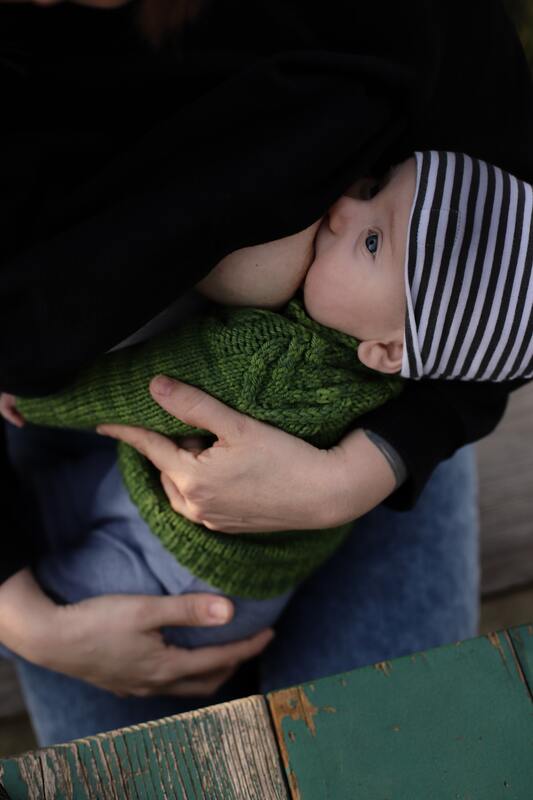
Whether you are here because you are a first-time mama curious about this natural (non-systematic) form of "natural family planning" or you are a seasoned parent looking for a way to prioritize bonding while naturally spacing your children, you are in the right place. Let’s dive into the "why" and "how" of this beautiful, ancient practice, updated for 2026. WHAT IS ECOLOGICAL BREASTFEEDING?At its simplest, ecological breastfeeding is a "style" of nursing that mothers and babies have followed since the beginning of humanity. It’s more than just providing milk; it’s a way of mothering that keeps mama and baby in close physical proximity, leading to the natural suppression of ovulation. Scientifically, Ecological Breastfeeding is the more intense big sister of what is called the Lactational Amenorrhea Method. When a baby nurses frequently and exclusively, it triggers a hormonal response, specifically affecting the pulsatile release of gonadotropin-releasing hormone, which keeps the ovaries in a "quiet" state. But here is the "real talk": it isn't a magic switch. It requires a specific set of behaviors to be effective for natural child spacing. We call these the Seven Standards, popularized by the wonderful Sheila Kippley. THE SEVEN STANDARDS: YOUR GENTLE GUIDEI like to think of these standards not as a strict "to-do" list that determines your value as a mother, but as a roadmap for those who want to maximize the spacing benefits of breastfeeding while developing a lovely close bond with their babies. Think of them as a "reminder" that your body was designed to be your baby's everything ~ for a season. 1. Exclusive Breastfeeding for the First Six Months In our modern world, it’s so tempting to start solids early or offer a little water. But for ecological breastfeeding, "exclusive" means nothing else: no water, no juice, no cereal...for the first full six months. This ensures your baby is getting 100% of their nutrition from you, keeping your prolactin levels high. If that sounds unhealthy, think again. Exclusive breastfeeding for the first six months isn't just something hippie moms came up with while lounging about in their yurts knitting hemp diapers. Both the World Health Organization and the American Academy of Pediatrics recommend exclusive breastfeeding for the first six months of a baby's life. Of course, every baby is different and there may be health reasons that require your young baby to be fed something other than breastmilk. This "exclusive breastfeeding for the first six months" advice applies to the vast majority of healthy babies, but not every baby. 2. Pacify at the Breast This is one of the most controversial standards in a culture that emphasizes getting your baby to self-soothe as early as possible. When your baby is fussy, tired, or just needs a moment of peace, offer the breast. We often hear "don't let the baby use you as a pacifier," but I want to give you permission to ignore that. You are the original pacifier! Contrary to the "don't let your babies use you as a pacifier" mentality, the reality is pacifiers are designed to replace the mother's nipple, not the other way around! Despite the vast majority of media images of babies, which almost universally depict them with a pacifier stuck in the mouth, nuks are not an essential piece of equipment for baby care. That being said, there is no need to view pacifiers in a strictly good / bad way. If your goal is to use ecological breastfeeding for its child spacing effects, then it is very important to avoid pacifier use. However, this does not mean pacifiers are inherently "bad." They are tools that, when used appropriately, can be beneficial. In my family, I raised my seven kids without pacifiers except for brief use by my last two babies who required NICU stays and pacifiers were helpful to soothe them when I was unable to be with them. That being said, if you can avoid them completely, as I was able to with my first five babies, this will help you to achieve natural child spacing if that is your goal. Comforting your baby at the breast ensures the frequent stimulation your body needs to keep your reproductive hormones suppressed. 3. No Bottles or Pacifiers This is the flip side of Standard 2 and while it may seem a bit redundant, it is striving to make the point perfectly clear: avoid artificial nipples entirely. They change the way a baby sucks and can subtly decrease the time a baby spends at the breast. Even a "small" bottle can sometimes lead to a longer stretch of sleep or a skipped nursing session that might just signal your body to start cycling again. In my Fertility after Childbirth course, mothers learn that soon after birth, your reproductive hormones and your breastfeeding hormones are in a kind of tug of war for dominance. By feeding your baby directly at the breast every time, you strengthen as much as possible the "breastfeeding" side of that tug of war, lengthening your natural spacing between babies. 4. Sleep with Your Baby for Night Feedings While bedsharing with babies is very controversial, it is important to understand that from a biological perspective, night nursing is the heavy hitter for child spacing. Prolactin levels are highest during the night. By keeping your baby close at night (safely co-sleeping or with baby in a "side-car" bed arrangement), you can nurse almost without waking up, preserving your own rest while keeping your breastfeeding hormones dominant. I honestly remember feeling perplexed why everyone repeatedly asked me if my very young baby was "sleeping through the night." I wondered why they were obsessed with baby's sleep as, most nights, I felt well rested. And after sharing sleep with all seven of my babies, I am convinced that with safe sleep sharing, most mothers and young babies experience more restful sleep. 5. Sleep with Your Baby for Nap Feedings This is the standard people often forget or choose to skip! In her teaching on ecological breastfeeding, Sheila Kippley often emphasizes the "daily nap feeding." Even as baby gets older, lying down with them for a nap and nursing them to sleep provides that mid-day lactation hormone "boost" that keeps ovulation at bay. It’s also a wonderful way for a busy mama to catch her breath. 6. Nurse Frequently (No Schedules!) If you find yourself looking at a clock or an app to see if it’s "time" to feed, put it away. Ecological breastfeeding is about responsive, on-demand (or rather, on-cue!) nursing. Whether it's been 30 minutes or three hours, if baby shows interest, we nurse. This creates the "frequency factor" that is absolutely vital to the effectiveness of this method as a means to space pregnancies. 7. Avoid Separation (Mother-Baby Togetherness) In our 2026 world, this can be the hardest standard. It means staying with your baby as much as possible. When we separate from our babies for long periods, we naturally skip those "snack" feeds or comfort nibbles that keep our cycles suppressed. If you have to be away, it doesn't mean you've "failed," but it does mean the child-spacing benefit may be less reliable or lost entirely. If you routinely need to be separated from your baby for work or other reasons, do not rely on breastfeeding to space your babies. In that case, you will benefit from learning a systematic, modern form of natural family planning. As an update to my earlier post about ecological breastfeeding, it seems like a great time to update what happened with my own fertility since my last post. Since 2014, I became pregnant three more times. I had a miscarriage in 2016 but got pregnant again in 2016 and then once more in 2022. I had a baby at 30 weeks of pregnancy in 2017 due to severe pre-eclampsia. I was unable to do all seven standards of ecological breastfeeding with her, due to her very early birth which meant her medical care, though life-saving, was not at all natural. I was able to practice most of the standards, except I had to provide donor milk to her and she was fed both my own milk and donor milk through a feeding tube for the first year of her life. Despite this, I still managed to have 12 months of natural amenorrhea (no menstrual periods and no ovulations) after her birth! After my last living baby's birth, my fertility returned in 2018. My cycles were very regular, interrupted only once by a molar pregnancy in 2022, that thankfully was diagnosed early. Now I am in the last stage of the menopausal transition. I do not regret using ecological breastfeeding throughout my entire childbearing years. It was a beautiful way to space our babies. Why This Matters: The Heart of the MatterBeyond the biological benefit of spacing pregnancies (most mamas using this method see an average of 14.5 months of natural infertility!), there is a deep, spiritual "why" here. For those of us in the Catholic community, ecological breastfeeding is often seen as a beautiful way to live out our "openness to life" while respecting the natural rhythms God placed in the female body. It is a form of Natural Family Planning (NFP) that doesn't require thermometers, charts or peeing on strips in the early months, it just requires you and your baby. It creates a "peaceful cocoon" around the fourth trimester and beyond. It validates the "fragile" state of early motherhood and encourages us to slow down, to sit, to cuddle, and to simply be. It is a beautiful rhythm; you give to baby, baby gives back to you by prolonging your natural infertility so you can continue to give to him, until he is independent enough to be ready for a new little sibling. You Are Not Alone in This JourneyI’ll be the first to admit that ecological breastfeeding can feel like an "unpopular truth" in a world that demands we "get our body back" by three weeks after birth and back to work just a few weeks later. It can be exhausting. It can feel like you are the only one not "sleep training" or using a pacifier. But you don't have to do it alone. We have a vibrant community of mamas who are walking this same path. If you are looking for support, I would love for you to join our Catholic Nursing Mothers’ Group. We currently meet online every third Monday of the month in the morning ~ at least in the western hemisphere; we've had mothers from all over the world! It’s a space where we can talk about the nitty gritty of natural infertility, the joys of a well-latched baby, and the prayers that get us through the long nights. If you wish, click here to learn more about the group and the topics we cover in our meetings. And if you are struggling with the "how", if the latch is agonizing or you’re worried about your supply, please reach out. I offer Breastfeeding Consultations both in-person for our Twin Cities families and virtually for my global mamas. Sometimes, a tiny adjustment is all it takes to turn a struggle into a "joyful" success. A Final ReminderYour story matters. Your body is a gift, and the way you nourish your child is a profound act of love. Whether you follow all seven standards or just a few, know that you are doing a beautiful work. There is no need to "move on" from this season before you or your baby are ready. Give yourself permission to be the "gentle guide" your baby needs. I want to hear from you! Have you tried ecological breastfeeding? What was the hardest "standard" for you to maintain, and what was the biggest blessing you found in it? Share your journey in the comments below! With love and support,
Christelle
0 Comments
As you prepare for the upcoming holidays, here are a few gentle reminders and practical tips to help you and your little one stay peaceful, connected, and full of Christmas joy this season. 1. Keep Connection at the Center Your little one may not understand what makes the holidays special — but they do know what makes you feel special to them. Extra gatherings can be exciting but also overwhelming for babies and toddlers. Try to hold onto a few “anchors” of connection each day — a quiet cuddle before guests arrive, a short walk outside, or singing a familiar song together. Even just slowing down for eye contact and smiles communicates love and safety in the midst of the bustle.
3. Keep Nursing Simple and Centered If you’re breastfeeding, the holidays can bring both blessings and challenges. Changes in schedule, diet, and stress can affect milk supply, and family gatherings can sometimes stir up mixed feelings about nursing in public or around relatives. And a secret that many moms don't realize is the busy-ness of the season can trigger an unexpected return of fertility! Guess how I know that?! Yes; her name is .... Remember: you are nourishing and comforting your baby — a truly beautiful and tender act of love. Try to carve out calm, private moments to nurse - if privacy feels best for you - or proudly feed your baby wherever you’re both comfortable. If you’d like some extra encouragement, join one of ouor upcoming mothers' support groups as we discuss “Nursing Your Baby Through the Holidays." 🕊️ We’ll share practical tips, laughter, and support for making this season nurturing for you and your baby. Both of these groups currently meet online, so you don't even need to leave the house!
4. Keep Expectations Gentle No one — not even the most organized parent — can do it all. This year, let “presence” be your gift. Your baby doesn’t need perfect decorations, fancy outfits, or gourmet meals. They need you — peaceful, present, and full of love. If things get loud or messy, smile and remember that these are the moments that will become stories someday. A baby’s giggle at the dinner table or a sleepy snuggle by the tree is worth more than the best Instagrammable house! Wishing You a Season of Peace and Connection May this holiday season be filled with joyful gatherings, calm mealtimes, and deep connection with your little one — body, mind, and spirit. Whether you’re signing, nursing, or simply soaking in baby cuddles by the twinkling lights, you’re doing beautiful work as a parent.
What part of the holidays are you looking forward to sharing with your little one the most? Comment below and let us know!
We had been hoping for and planning to try for another child -- so the news I was pregnant was welcomed by both of us -- but I share this story to let you know that holiday weaning -- and an unexpected holiday-conceived baby -- aren't just theories for me! A mere two months prior to that positive pregnancy test, when our oldest child turned two years old, I had visited my doctor to let her know that my fertility (both menstruation and ovulation) had not yet returned. Due to my prior history of infertility, she had advised that we begin to investigate possible causes. However, I had done nothing more than talk to the doctor when we conceived our dearly loved second child. Surprise! What happened? After giving birth, a breastfeeding mother has two different hormonal "sides" that can be imagined as the two sides of a scale. On one side, she has breastfeeding hormones that promote lactation (and tend to suppress ovulation) -- and on the other, reproductive hormones that promote ovulation, and which may lead to another pregnancy. While the timing of her return of fertility varies from woman to woman, and even from baby to baby by the same mother (due to many different factors) the general principle is that frequent and unrestricted suckling at the breast is the most important factor that keeps the breastfeeding hormones side of the scale "heavier," resulting in continued natural suppression of fertility. However, the further out in time from the birth, the easier it is for the reproductive hormones to tip the scales, so that menstruation or ovulation may return. This is part of the reason why the holiday season is indirectly responsible for many late summer and fall babies! What factors contribute to this unexpected holiday-related return of fertility? Here is a partial list:
If, like my husband and me, you are hoping for another baby, then just pay attention to your signs of fertility and enjoy making your holiday baby if the signs point to being fertile! However, especially if your baby is under a year old, you may want to protect your breastfeeding relationship, discourage weaning, and delay making a new baby until later in the future. In that case, you definitely want to do what you can to avoid changes in your usual nursing and sleeping routines as much as possible. This may not be the year to host holidays and celebrations! Keep your meals and preparations simple, and maybe even skip some of this year's parties. Remember, you need to maintain your normal routines as much as possible, so that baby's frequent suckling at the breast remains as consistent as possible. At the same time, be vigilant to observe and record your signs of fertility, so that if you do detect any changes that indicate fertility, you and your husband can still celebrate, but in less intimate ways. If a more detailed discussion of how to protect your breastfeeding relationship during the holidays, how to interpret your signs of fertility, or how to understand the return of fertility after birth would be helpful to you, contact me (Christelle) to book a free online, phone, or in-person consultation. As a certified breastfeeding counselor and fertility educator, I can help! For Catholic breastfeeding mothers, "Navigating the Holidays as a Breastfeeding Family," and the unexpected return of fertility are the discussion topics of our online Catholic Nursing Mothers' Group in November. Reach out if you would like to join us for this free online breastfeeding support group!
If you've used Natural Family Planning [NFP] or a fertility awareness method for any length of time, you've probably heard this joke: Q. What do you call people who use NFP? A. Parents! [Yucka yucka yucka.] You may have heard that natural methods of family planning have a very high rate of effectiveness at avoiding pregnancy, as high as 99% effective, depending on the rules followed. To achieve this high rate of effectiveness, natural methods of family planning rely on abstinence from sexual intercourse and genital contact without penetration -- yes, contact pregnancies are a thing. So if that's the case, how come "NFP families" tend to be so darn big??!! (Cue family photo here.) (Yes; they're all ours.) Let's get real. How come NFP families tend to be so darn big? 1. Taking chances. NFP requires abstinence. As I said before, "To achieve this high rate of effectiveness, natural methods of family planning rely on abstinence from sexual intercourse and genital contact." How many people do you know who are super good at abstinence from say, junk food? White lies? Gossip? And those aren't even particularly good things. Sex is a good thing. Sex with one's spouse is a very good and wonderful, and yes, pleasurable thing. Let's be real...sometimes the idea of maybe-possibly-who-knows? we could have another baby -- and babies are also very good and wonderful -- doesn't seem like such a Bad Idea. So the couple takes a chance...and along comes little Jenny or Timmy. I won't embarrass my kids by naming names, but let's just say I have personal experience with reason #1. If you are serious about not getting pregnant, you cannot, I repeat, CANNOT, take chances. 2. Being inexperienced or "relaxed". If you don't really understand how NFP works... like maybe you learned from the internet for example...you might not really understand how to observe, record, and interpret your signs of fertility. The evil twin sister of this idea is when you really do know how to do all of the above, but you just get kind of in a mindset that things are usually like "x" so you don't really need to do all the things and poof! just like that, something changes and a couple weeks later you're looking down at two pink lines...ask how I know lol. Natural methods are very unforgiving of missed observations and wishful thinking. You gotta do the method consistently to expect it to work. 3. Changing your minds. One of the benefits of natural methods of family planning is even if yesterday you were darn sure you never wanted another baby, you can change your mind the very next day and there's nothing to worry about or wait for. Go ahead and try! Newsflash: families using NFP don't need to announce their pregnancy intentions to anybody, so even if you assume or they told you that they're using NFP to avoid pregnancy, maybe they changed their minds and that is why they're having another baby! Don't assume the method "failed" -- it actually may have been used to achieve a wanted pregnancy! Thank the method for indicating you were fertile so you were able to have a baby that you wanted! 4. Method failure. While rare, it is possible that the couple used the natural method correctly, didn't take chances, and still got pregnant. If you are having sex, or even just "fooling around" without penetration, pregnancy is possible. This is true of any methods (natural or not), as long as the woman's ovaries and the man's testicles are intact. Even patients who have had a tubal ligation or vasectomy become pregnant from time to time. Life sometimes finds a way, even when the "chance" of pregnancy is extremely low! As with any family planning method, natural methods used correctly may fail to prevent pregnancy. If your sexual organs are intact, complete abstinence is the only way to be 100% certain you will not become pregnant. Share your NFP stories! I would love to hear from you!

|
Details
Archives
May 2026
Categories
All
Enter Your Email Address to get St. Croix Birth Blog Posts in Your Inbox(We don't collect your email address and you won't get anything else from us.)
|

RSS Feed