St. Croix Birth & Parenting LLC
  • Home
  • Events & Classes
    • Free Parenting Class
  • Birth
    • Birth Doula Care
    • Newborn Care Birth Place Visit
    • Breastfeeding
  • Parents Groups
    • St Croix Valley Mothers Support Group
    • Catholic Nursing Mothers Support Group
    • Baby Sign Play Classes
    • Baby Loss Support Group
  • Rooted Families Blog
  • Contact Us
  • Store

5/31/2026

Safe Babywearing 101: How to Wear Your Baby with Confidence

0 Comments

Read Now
 
Picture
There is a specific kind of "new parent panic" that sets in around 11:00 AM. You’ve finally settled the baby, but you realize you haven’t eaten, the laundry is mounting like a small mountain range in the hallway, and for your arms every day is "arm day." You want to hold your little one, that fragile, precious soul, but you also really, really need some food. And maybe a little break for your arms.
​

Babywearing isn’t just a "parenting hack." It is a lifesaver. It is the bridge between the intense needs of a newborn and the practical realities of life, and this goes double or triple if you have another tiny human or two (or three...) running around. Whether you are navigating the first few weeks or seeking natural birth support and a smooth transition into parenthood, wearing your baby allows you to keep that "tender, peaceful bond" while reclaiming your hands.
​

But, like anything worth doing, it comes with a learning curve. I remember the first time I tried a long wrap; I felt like I was trying to wrap an entire bedsheet around me and ended up looking more like a mummy than supermum. But once you master the safety basics, you move from "I hope I'm doing this right" to "I got this."
​

Why We Wear: The Heart of Babywearing

Before we dive into the "how," let’s talk about the "why." Beyond the sheer convenience of being able to eat a sandwich with both hands, babywearing offers profound physiological and emotional benefits:
​

  • Hormonal Harmony: Keeping your baby close to your chest triggers the release of oxytocin, the "love hormone", in both you and your baby. This is a beautiful gift that aids in bonding and can even support your breastfeeding journey.
  • Regulated Systems: Your baby is still learning how to exist outside the womb. Being against your skin helps regulate their heart rate, temperature, and breathing. It makes that transition from "in womb" to "in arms" seamless.
  • Reduced Crying: Research consistently shows that "carried" babies cry less. When they can hear your heartbeat, they feel safe and secure.
  • Physical Development: Upright carrying can help with digestion (goodbye, reflux!) and encourages the strengthening of neck and core muscles.
​

The T.I.C.K.S. Rule: Your Safety Compass

When it comes to safety, we don't guess. We follow a clear, actionable framework. The T.I.C.K.S. rule is the gold standard for ensuring your baby’s airway is protected and their spine is supported.
​​
T : Tight
​
The carrier or wrap should be snug enough to hold your baby firmly against you. Think of it as a "firm hug." If the fabric is too loose, your baby might slump down, which can restrict their breathing. A good test? If you lean forward and your baby pulls away from your body, it’s time to tighten things up.

I : In View at All Times
You should always be able to see your baby’s face just by looking down. Ensure no fabric, clothing, or even your own hair is covering their nose or mouth. We want to see those sweet, sleepy snuggles clearly!
​

C : Close Enough to Kiss
This is my favorite rule. Your baby should be positioned high enough on your chest that you can easily kiss the top of their head by just tipping your head forward. If they are sitting too low on your belly, they aren't properly supported, and it will eventually put a strain on your back, too.
​

Picture
K: Keep Chin Off Chest
​
This is vital for airway safety. A newborn’s head is heavy, and their neck muscles are weak. If their chin is forced down onto their chest, it can partially close their airway. Ensure there is always a space of at least one to two finger-widths under their chin.

S : Supported Back
In an upright carry, the baby should be held comfortably close to the wearer so their back is supported in its natural "C-curve" position. Their tummy and chest should be against you, not twisting away.

Mind the Hips: The Magic "M" Position

Beyond the airway, we also care deeply about those tiny growing joints. For the first few months, a baby’s hips are quite flexible, and improper positioning can increase the risk of hip dysplasia.
​

We look for the "M" Shape (often called the "froggy" position).
  • Knees higher than the bottom: The fabric should support the baby from knee-crease to knee-crease.
  • Spread squat: Their legs should spread naturally around your torso, with the weight resting on their bottom, not dangling by their crotch.
​​
When you look at your baby in the mirror, their legs and bottom should form a wide "M." This keeps the ball of the hip joint nestled deeply into the socket, allowing for healthy development.
​

Picture

You Are Not Alone in the "Wrap Struggle"

If you’ve watched a YouTube tutorial five times and still feel like you’re wrapped in swaddling clothes, please know that you are not alone. There is no need to feel frustrated or like you "just aren't a babywearing person." Sometimes, you just need a gentle guide to show you the way. As you can see, while we are beyond the carrying stage now, babywearing was a part of my family's life with littles from the beginning!
​
While there are definitely better carriers for dads now, (No Magic M in sight! 😬) you can see my husband did his share of babywearing.
​

Picture
I loved using ring slings, though they definitely have a learning curve. A huge pro for ring slings is the ease of "unwearing" a sleeping baby. Compared to other carriers that require you to lift baby out or unwind yourself like a spinning doll, ring slings make it easy to transition your sleeping little one. Once baby is asleep, you can lay baby and sling down at the same time, and ease yourself out, letting baby sleep with the thin fabric underneath her. Remember when wearing baby in the sling: keep one hand on or around baby at all times and make sure to keep her face where you can see it.
Picture
I was also a huge fan of the Boba brand carrier. It was very comfortable for use and made safe kitchen tasks or housework easy to do with baby in tow. For older babies who can back carry, it is a great option for hiking.
Picture
Picture
This stretchy wrap was one of the last types of carriers I used. Though definitely trickier to put on, this type of carrier spreads the baby's weight over your whole back which is quite comfortable.
Picture
If you need help choosing and learning to use baby carriers, this is where our postpartum doula services really shine. At St. Croix Birth & Parenting, we don’t just "help with the baby": we empower you to care for your baby with confidence. Our doulas can come to your home (or meet via telehealth) to help you master your specific carrier, whether it’s a ring sling, a stretchy wrap, or a structured buckle carrier. We’ll check your T.I.C.K.S., ensure that "M" shape is perfect, and help you find the "sweet spot" where both you and baby feel light as air.
​

We also love seeing families at our Baby Sign Play classes and parent groups! It’s a wonderful place to see other parents wearing their babies and realize that we are all just learning together, one step at a time.
​

Picture
Picture

A Final Reminder: Your Story Matters

As you navigate these early days, remember that your baby doesn’t need a "perfect" parent: they just need you. They need the sound of your voice, the warmth of your skin, and the rhythm of your heart. Whether you wear your baby for ten minutes while you fold some onesies or for two hours while you go for a peaceful walk, you are providing them with a sanctuary of love.

You are doing a beautiful job, mama (and papa!). These days are fragile and joyful all at once. If you ever feel overwhelmed by the fog of new parenthood, reach out. We are here to support you, pray for you, and celebrate every small victory with you.
​

Do you have a favorite carrier that has been a lifesaver for you? Or are you still trying to find the right fit? Share your journey in the comments below (I'd love to hear your story!)

Share

0 Comments

5/9/2026

THE FIRST THIRTY DAYS: GETTING STARTED BREASTFEEDING YOUR NEWBORN

0 Comments

Read Now
 
Picture
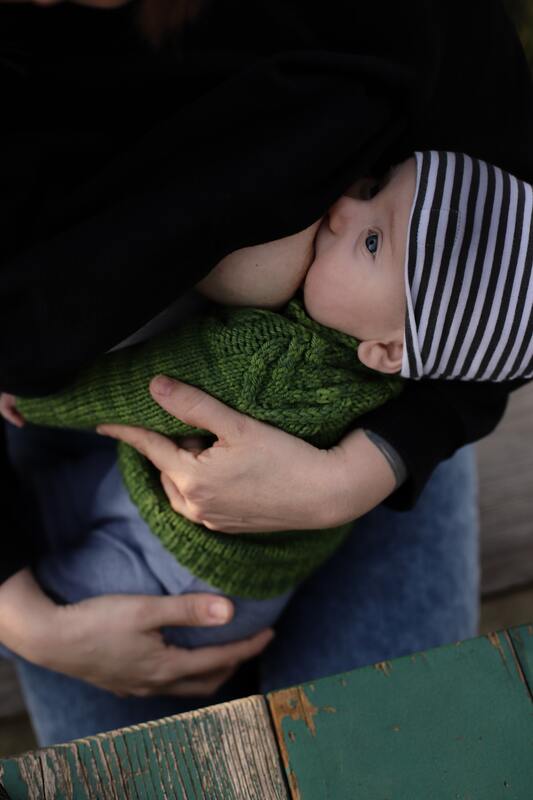
Oh, the first thirty days! ​They are such a tender, fragile, and utterly transformative time. The first six weeks aren’t just about "learning to feed the baby," it’s about the two of you finding a rhythm that will sustain you for months, or even years, to come. Like learning how to do an intricate dance with someone who doubles in size during the six-week class!
I remember with my first, I thought breastfeeding would just happen. I thought it was as natural as breathing. But as I laid there in that hospital bed, feeling the weight of responsibility and the sting of a shallow latch, I realized that while it is natural, it is also a skill, a dance that both mother and baby have to learn together.
If you are in those exhausting early weeks right now, please hear me: You are not alone. Your efforts matter deeply, and the "News about Newborns" during this neonatal period is that every single drop of milk you provide is a blessing, a literal labor of love. A self-gift with life-long benefits.

THE VITAL "NEONATAL WINDOW" 

The first 28 days are referred to as the neonatal period. This is a critical time for establishing your milk supply and training your body’s hormonal pathways. During these weeks, your breasts are "calibrating." They are learning exactly how much milk your specific baby needs. This is why it's so important to lay back and feed your baby as often and for as long as he wants. Frequent nursing ~ aim for 10 to 12 times in a 24-hour period ~ is the best way to tell your body, "Yes, we do need this much!" This isn't just about nutrition; it's about signaling. When you respond to those tiny hunger cues: the rooting, the hand-to-mouth motions, those quiet hunger grunts, you are building not only your milk supply, but a foundation of trust in you.
Picture

TIPS FOR A STRONG START IN THE FIRST MONTH

Getting off to a strong start requires some key concepts: a good latch, frequency, and, most importantly, your own care so you can heal and regain your strength and build an abundant milk supply.
1. Focus on the Latch
A good latch shouldn't be agonizing. Yes, there might be some initial "tender" moments as your nipples get used to the sensation and the stretching, but if you feel sharp or "squashing" pain, it’s a sign to gently break the seal and try again. Aim for a "deep" latch where the baby takes in a good portion of the areola, not just the nipple.

2. Embrace the "Ecological" Rhythm
Many families I work with across the globe, and throughout the Twin Cities, St. Paul, Minneapolis, Stillwater, Woodbury, Hudson, and the St. Croix Valley are especially interested in ecological breastfeeding as one of our unique offerings. This isn't just about food; it’s a lifestyle of mother-baby togetherness. By following the "Seven Standards", which include frequent nursing, avoiding artificial nipples (pacifiers/bottles), sharing sleep, babywearing, and avoiding separations from your baby, many mothers find that this "attachment parenting" style of breastfeeding actually helps to avoid common breastfeeding difficulties, like low milk supply and engorgement -- and the plugged ducts and mastitis that often follow. And this natural way of breastfeeding suppresses the reproductive hormones in many women, spacing children naturally. It’s about working with your body’s design.
3. Maternal Care is Not Selfish
You cannot pour from an empty cup. To make milk, you need calories, hydration, and, as much as possible, rest. I know, "sleep when the baby sleeps" feels like a joke when the laundry is staring at you or your toddler is asking you to read The Cat in the Hat for the fiftieth time. But in this first month, give yourself permission to let the house be a bit ~ or a lot! ~ messy and ask for help, including care of any older siblings. Your job is to care for yourself so you can heal from the beautiful but strenuous work of birth and to care for the new little human in your life. Breastfeeding is a full-time job!

Finding Your Village: Support Groups

Breastfeeding is not meant to be done in isolation. Historically, women had sisters, mothers, and aunts surrounding them. Today, we have to be more intentional about creating that circle. At St. Croix Birth & Parenting, we offer two very special spaces for this, both available to families in the Twin Cities metro and St. Croix Valley and around the world who are looking for connection:​
  • St. Croix Mamas' Group (for "natural parenting" mommies): A casual, supportive environment where you can bring your baby, share your struggles, and celebrate the wins. Whether you're worried about supply or just need to see another mom going through what you're going through, we are here. And there is no fee to participate!
  • Catholic Nursing Mothers' Group: This is one of our especially unique offerings for families seeking Catholic breastfeeding support in the Minneapolis-St. Paul area and beyond. This online group integrates our faith into the journey. We view breastfeeding as a beautiful gift from God, a way to participate in His creative and nurturing love. We talk about the spiritual side of motherhood while troubleshooting the physical side.
Picture
  • Both our St. Croix Mamas' Group and the Catholic Nursing Mothers' Group will be diving into the same theme for May and June: "Getting Started Breastfeeding: The First Month." It’s the perfect time to drop in, ask your questions, and find your rhythm alongside other moms. Whether you’re looking for practical tips or a little spiritual encouragement, we’d love for you to join us and give it a try—you don't have to navigate these early days alone!
If you're looking at the upcoming schedule and wondering where to begin, the Breastfeeding Matters class is a lovely first step, especially for expectant and newly postpartum families in St. Paul, Minneapolis, and surrounding Twin Cities communities. (But since it's a virtual class, you can join from anywhere!)

When You Need a Little Extra Help

Sometimes, despite our best efforts, challenges arise. Maybe it's a tongue-tie, a slow weight gain, or just a feeling of being overwhelmed. This is where professional support can make all the difference.
If you are struggling, please don't wait until you are at a breaking point. A breastfeeding consultation can provide the technical guidance and emotional reassurance you need. We can meet in person throughout the Twin Cities, including Minneapolis, St. Paul, and nearby communities, or virtually if you're further away.
Additionally, our postpartum doula services are designed to mother the mother. Imagine someone coming into your home to hold the baby so you can shower, or to fix you a nutritious snack while we talk through your breastfeeding goals. It's about providing that "gentle guide" during the transition into parenthood.

A BLESSING FOR YOUR FIRST MONTH

To the mama sitting there right now, perhaps with a sleepy baby on her chest: Your body is doing a miraculous thing. Whether your journey feels like a peaceful stream or a turbulent river right now, know that you are the perfect mother for your child.
In these first 30 days, remember you can SUCCEED when you breastfeed:
  • SUpport: Especially from your own mother and the baby's father
  • Counselor: A peer breastfeeding counselor is a wonderful asset to help support you on your breastfeeding journey.
  • Consultant: International Board-Certified Lactation Consultants (IBCLC) are the most qualified experts in lactation.
  • Education: Taking a quality breastfeeding education class before birth helps you understand how breastfeeding works, what to expect, and how to prevent common breastfeeding difficulties.
  • Example: The example of other breastfeeding mothers makes a tremendous difference in your confidence and chances of success. Join a local breastfeeding mothers' group or start your own!
  • Determination: The decision to breastfeed has to come from your own heart, not due to pressure from anyone else. Breastfeeding has to be right for you because you are needed round the clock!
You’ve got this, mama. And when it feels like you don't, we are right here to hold your hand.
I’d love to hear from you: What has been the most surprising part of your first 30 days? Or, if you’re still waiting for baby’s arrival, what is the one thing you’re most looking forward to (or nervous about) with breastfeeding? Share with us in the comments!
Picture

Share

0 Comments

5/2/2026

LOOK AT ME, LOOK AT YOU: THE MAGIC OF YOUR BABY'S FIRST VISUAL CONVERSATIONS

0 Comments

Read Now
 
Picture
There is a moment, usually in those dark, quiet hours of the early morning, when the world feels like it’s just you and your baby. You’re likely exhausted, sore, and navigating the tender, fragile transition into life with a new little soul. Then, it happens. Your baby’s eyes, which have spent most of their time tightly shut or wandering aimlessly, suddenly lock onto yours.
That first moment of eye contact is such a beautiful way to begin your parenting journey. It’s the moment the postpartum fog clears for a split second, and you realize: We are connecting. This is really happening.
Now that it's May, Healthy Vision Month, I wanted to take some time, as part of our News about Newborns series, to chat about the miracle of your baby’s developing sight in the first 28 days of life. This neonatal period is not just about biology; it’s about the very first conversations you’ll ever have, while you are also healing, adjusting, and finding your footing as a mother.

THE "MURKY" WATERS OF NEWBORN VISION

When you first bring your baby home, their world is a bit of a blur. If you’ve ever felt like your newborn is looking through you rather than at you, don't worry, you aren't imagining it!
At birth, a baby’s visual system is still under construction. Their retinas aren't fully developed, and the neural pathways between their eyes and brain are just beginning to fire up. A newborn can only see clearly about 8 to 15 inches away from their face. If that distance sounds familiar, it’s because it is exactly the distance between your face and theirs while you are cradling them for a feeding ~ or a snuggle; Dad's face is equally interesting!

Isn't it beautiful how God designed it that way? Even when their vision is limited, they are biologically "hardwired" to see the people who love them most.

Picture
During these first few weeks, your baby sees primarily in shades of black, white, and gray. High-contrast patterns are their favorite things to look at because their brains can process those sharp edges more easily. This is why those black-and-white board books, those crazy patterned mobiles, or even the stripes on your favorite shirt might capture their attention more than the traditional pale pastel nursery.

EYE CONTACT AS THE FIRST SOUL-TO-SOUL CONVERSATION

We often think of "conversation" as something that requires words, but for a newborn, sight is the primary language. When your baby locks eyes with you, they aren't just "looking"; they are absorbing information. They are learning the topography of your face, the curve of your smile, and the light in your eyes.
This eye contact is an essential part of their social-emotional development. It triggers a cascade of "feel-good" hormones in both of you. Oxytocin, the "love hormone," floods your system, strengthening that invisible tether between parent and child. It’s a peaceful, joyful feedback loop that tells your baby, “I am safe. I am seen. I am loved.” This beautiful moment of connection is a reminder there is a deep, quiet peace to be found in simply being with your child. Even in the midst of the chaos of "mud season" here in the St. Croix Valley, as the rain pours down around me (literally, our roof leaks lol), there is order in the design.

THE FIRST 28 DAYS: WHAT TO LOOK FOR

Since May is Healthy Vision Month, it's the perfect time to give yourself permission to slow down and simply observe what is unfolding during the neonatal period. The first 28 days are a whirlwind involving enormous change for both baby and mother. While every newborn develops on their own unique timeline (and please, don't let the "comparison trap" steal your joy!), here are a few gentle things to watch for in those early weeks:
  • In the First Days: Your baby usually prefers faces, strong contrast, and that familiar 8-15 inch distance during feeds and cuddles.
  • During Week 1 to Week 2: You may notice brief periods of eye contact, short tracking movements, and longer alert windows between sleepy snuggles.
  • By the End of the First Month: Many newborns begin following a face or object a little more smoothly and showing more interest in the world around them.
​This same 28-day window is also a crucial season for postpartum recovery. While you are noticing your baby’s development, you may also be healing physically, navigating bleeding and afterpains, adjusting to hormonal shifts, and learning your baby’s rhythms one hour at a time. If you ever feel overwhelmed or uncertain about what is normal for your newborn or for your own recovery, please know that postpartum doula services can be a wonderful resource. As you navigate feeding, rest, emotional changes, and newborn questions, while also trying to take care of your own rapidly changing body, having a gentle guide by your side can provide such a sense of peace during those first fragile weeks.
Picture

BEYOND SIGHT: THE BRIDGE TO COMMUNICATION

As your baby’s vision sharpens, you’ll notice they start to watch your hands and your mouth with intense fascination. They are preparing for the next step in their journey: active communication.
This is why I am such a passionate advocate for baby sign language classes. Long before a baby has the physical ability to form words with their mouth, they have the visual and motor skills to "speak" with their hands. By taking advantage of what they can do ~ watch you closely and mirror back the hand gestures you are using ~ you can reduce frustration and open up a whole new world of understanding between you and your little one. It’s like showing them the "doggie door" to communication so they can pass through months earlier than if you need to wait for them to grow big enough to reach the "door handle" of verbal communication!

Join Our "Look at Me, Look at You" Class

If you find yourself captivated by these early "conversations" and want to learn more about how to support your baby’s visual development, I would love to invite you to our upcoming Featured Freebie Baby Signs parent webinar: Look at Me, Look at You.
This class, designed for parents of tiny ones 0-6 months, is part of our "News About Newborns" series and is specifically designed to help you understand the nuances of your young infant's vision and development. We dive deep into how to play with your baby in ways that respect their developing nervous system while fostering that deep, secure attachment we all crave.
Picture
Attendees will receive a sheet with practical parenting tips covered in the session, lyrics to songs, instructions for games, and pattern cards you can use with your baby. You can find more details and register on our booking site. This Featured Freebie is a wonderful way to connect with other families who are navigating the tender neonatal season right alongside you.

The SUPPORT Framework for Visual Bonding

​When things feel overwhelming, I like to use a little framework to help us stay grounded. If you're looking for ways to encourage your baby’s visual development during the first 28 days while also caring for your postpartum recovery, try the SUPPORT method:
  • Slow Down: Move your face or toys slowly. Give their eyes time to "catch" the movement.
  • Up Close: Stay within that 8-15 inch "sweet spot" during playtime.
  • Pause: Wait for them to respond. Newborns have a longer "processing time" than we do!
  • Patterns: Use high-contrast images or books to catch their interest.
  • Observe: Watch their cues. If they look away, they might be overstimulated and need a rest.
  • Rejoice: Celebrate every tiny gaze and half-smile as the blessing it is.
  • Talk: Narrate what they are looking at. "You see the twinkling lights, don't you?"

BLESSINGS FOR YOUR JOURNEY

As you navigate these early days of parenthood, and especially these first 28 days of newborn life, I hope you believe in the beautiful job you are doing. You are the "mirror" that your baby uses to understand himself and his new world. Your face is the most beautiful and interesting thing she will gaze at; your eyes are her first home.
Whether you are thriving or just trying to keep your head above water through the neonatal period, remember that you are not alone. Your story matters, and these sweet first conversations are just the beginning of a lifelong dialogue of love.
I’d love to hear from you: Do you remember the first time your baby really "saw" you? What did that moment feel like for your heart? Share your story in the comments below: I read every single one!
Blessings on you and your family,
Christelle
President, St. Croix Birth & Parenting LLC

For more tips on newborn care and parenting, check out our Rooted Families Blog or join one of our support groups.

Share

0 Comments

10/26/2023

HOLIDAY WEANING AND THE UNEXPECTED RETURN OF FERTILITY

0 Comments

Read Now
 
Picture
When my oldest (and gently weaning) child was twenty-six months old, relatives were coming from out of state for Thanksgiving. As a young couple, this would be the first time we ever hosted the big day. I was all in for the slow-baked turkey, the mashed potatoes and gravy, the yams, the beans, the salads, the pies, the harvest decorations, the beautifully laid table, and all the rest.
Thirty-eight weeks later, our second child was born, in the shower at home, in the middle of one crazy night.
We had been hoping for and planning to try for another child -- so the news I was pregnant was welcomed by both of us -- but I share this story to let you know that holiday weaning -- and an unexpected holiday-conceived baby -- aren't just theories for me!
A mere two months prior to that positive pregnancy test, when our oldest child turned two years old, I had visited my doctor to let her know that my fertility (both menstruation and ovulation) had not yet returned. Due to my prior history of infertility, she had advised that we begin to investigate possible causes. However, I had done nothing more than talk to the doctor when we conceived our dearly loved second child. Surprise! What happened?
After giving birth, a breastfeeding mother has two different hormonal "sides" that can be imagined as the two sides of a scale. On one side, she has breastfeeding hormones that promote lactation (and tend to suppress ovulation) -- and on the other, reproductive hormones that promote ovulation, and which may lead to another pregnancy. While the timing of her return of fertility varies from woman to woman, and even from baby to baby by the same mother (due to many different factors) the general principle is that frequent and unrestricted suckling at the breast is the most important factor that keeps the breastfeeding hormones side of the scale "heavier," resulting in continued natural suppression of fertility.
However, the further out in time from the birth, the easier it is for the reproductive hormones to tip the scales, so that menstruation or ovulation may return. This is part of the reason why the holiday season is indirectly responsible for many late summer and fall babies!
What factors contribute to this unexpected holiday-related return of fertility? Here is a partial list:
  • changes in the nursing and sleep routines caused by the typical busy-ness that often accompanies the holidays, including the extra cleaning, cooking and shopping, decorating, etc.
  • extra celebrations and parties, when a mother may delay or completely skip feedings
  • well-meaning relatives who may keep the baby or young toddler busy and distract him or her from nursing or may even feed the baby (with or without the parents' knowledge)
  • feeling awkward or embarrassed to nurse the baby in new situations or around different people
  • new people, blinking lights, and experiences that distract baby or toddler from wanting to nurse, or cause shorter feedings than usual
If, like my husband and me, you are hoping for another baby, then just pay attention to your signs of fertility and enjoy making your holiday baby if the signs point to being fertile!
However, especially if your baby is under a year old, you may want to protect your breastfeeding relationship, discourage weaning, and delay making a new baby until later in the future. In that case, you definitely want to do what you can to avoid changes in your usual nursing and sleeping routines as much as possible. This may not be the year to host holidays and celebrations! Keep your meals and preparations simple, and maybe even skip some of this year's parties. Remember, you need to maintain your normal routines as much as possible, so that baby's frequent suckling at the breast remains as consistent as possible. At the same time, be vigilant to observe and record your signs of fertility, so that if you do detect any changes that indicate fertility, you and your husband can still celebrate, but in less intimate ways.
If a more detailed discussion of how to protect your breastfeeding relationship during the holidays, how to interpret your signs of fertility, or how to understand the return of fertility after birth would be helpful to you, contact me (Christelle) to book a free online, phone, or in-person consultation. As a certified breastfeeding counselor and fertility educator, I can help!
For Catholic breastfeeding mothers, "Navigating the Holidays as a Breastfeeding Family," and the unexpected return of fertility are the discussion topics of our online Catholic Nursing Mothers' Group in November. Reach out if you would like to join us for this free online breastfeeding support group!

Share

0 Comments

8/12/2021

supporting new MOTHERs during a loCkdown: a guide for friends and extended family

0 Comments

Read Now
 
Picture
A mothers' group: the good old days?
The coronavirus pandemic has changed life as most of us once experienced it. Many areas of the world are in lockdown, and even in areas where things have opened up, as the number of COVID-19 cases spikes again, we will likely face more social distancing measures or quarantines to try to slow the spread (if we aren't already).
For some new mothers, this slower, more home-based pace of life has been a good thing. These moms report that being quarantined with their babies has helped them breastfeed, since - just to mention one thing - being separated from a nursing baby tends to make maintaining a milk supply more challenging and if nothing else, lockdown gives us lots and lots of time with our immediate family members. But in other and important ways, social isolation is not great for new mothers. Many important services that mothers need, including lactation help, have been more difficult or impossible to access during lockdown. Aside from access to healthcare, all mothers need other mothers, friends, sisters, cousins, grandmothers, aunts...we need our sisters and our sage femmes to let us know we're not alone; we're loved; we're doing a good-enough job; our kids are normal (usually); and, if they're not, to have faith that eventually, this too shall pass. Lockdowns put a lock on these face-to-face and side-by-side moments...natural social interactions which normally serve to lower our stress levels and restore us - "enhope" us. ​And all this goes quadruple for new mothers.
Dealing with lochia, sore nipples, night feeds, blow outs, the constant guessing games that a newborn brings (a/k/a no instruction manual), keeping a brand new non-verbal human thriving and growing, and caring for everything "down there" is just a lot. In some idealized past, we imagine our ancestral mothers got to lie around while their loving, supportive kin waited on them hand and foot. Sure, maybe that happened sometime, somewhere, but envying our long-departed great-great-grandmother's "lying in" is not really going to help you get through this painful feed, on this lonely day, at this ungodly hour.
So let's break this down. New mothers have physical needs. Food, water, monster sized maternity pads (in the beginning), menstrual pads later on, baths or showers, and (eventually) clean clothes. If you love her, ask about these things. If she needs something, help or ask someone else to help. Leave things on her porch, in her mailbox, send it unaccompanied up the elevator, or throw it through her window if you have to! (Or you could just give to the baby's dad, but that's not as fun.)
If she's good with her physical needs, I guarantee she has emotional needs. Call and ask about her birth. Listen. Bite your tongue if you find yourself starting any sentence with the words "at least." Listen. Celebrate the good stuff with her. Mourn with her anything she found sad. Share her anger if anything made her mad. Don't tell her what she should have done differently. Listen. Are you listening? Keep listening. No matter what, make sure to let her know how amazing she is. No one in the history of the world had her birth. It was her adventure and she is a heroine for having done it!
Call another time and ask how things are going with the baby. Celebrate the joys. Mourn the things that aren't going so well with her. Did I mention don't tell her she should have done anything differently? She is probably already beating herself up about something. If her baby is growing and developing, she's doing a great job. Tell her.
If her baby is struggling, offer to help. If she's got other kids, depending on your local situation, you might be able to have someone in mom's social bubble bring the baby's older siblings somewhere outside for a socially distanced / masked playdate so she can visit (whether in-person or virtual) with the doctor, or the chiropractor, or the lactation consultant, or whoever it is she thinks can help. Moms grow in confidence and feel capable when the people around them support their decisions about their baby's care. Be that person (even if you secretly disagree). Being a great friend / sister / mother / mother-in-law, etc., means supporting the new mom's efforts to become a mother, a big part of which is taking responsibility for her baby. And chances are very good that if the baby continues to struggle, even after that visit with [insert name here] she will try something else, and something else, and something else, and maybe, when she's tried everything else, she may even ask you for your advice! Now is your moment.
A few days or a week later, call her again. And then again. And yet again. And pretty soon she will blossom and her tiny baby will become a chunky monkey, roll over and crawl and take his first steps, and life will settle and she will never forget that you were there, on the sidelines, cheering her on the whole time. Maybe you never carried a meal to her bedside on a solid-gold tray, but you were there. And maybe she'll tell her great-great-granddaughters about you and how you were there for her when great-grandpa was born, during the time of the world coronavirus pandemic.

ways st. croix birth & Parenting can help

  • Twin Cities area Birth Place visits (where permitted)
  • ​Virtual breastfeeding counseling
  • Breastfeeding support groups (for Catholic mothers)

Share

0 Comments
Details

      Sign Up to Get Fertility, Birth & Breastfeeding News & Parenting Tips in Your Inbox

    Subscribe to Currents
    Picture

    The ROOTED FAMILIES Blog
    Blogger

    Christelle J. K. Hagen, BfNAE, ICI, SBD is a certified birth doula, certified Baby Signs instructor, Certified Birth & Bereavement Doula, fertility educator, and the President and Founder of St. Croix Birth & Parenting. Christelle helps mothers develop strategies to get pregnant naturally, give birth with confidence, and succeed when they breastfeed!
    ​
    "Blessed are those who trust in the Lord, whose trust is in the Lord. They shall be like a tree planted by water, sending out its roots by the stream. It shall not fear when heat comes, and its leaves stay green; In the year of drought it is not anxious, and it does not cease to bear fruit." ~Jeremiah 17:7-8 (NRSV-CE)

    Archives

    June 2026
    May 2026
    April 2026
    November 2025
    March 2025
    February 2025
    November 2023
    October 2023
    February 2023
    October 2022
    September 2022
    August 2022
    July 2022
    May 2022
    April 2022
    November 2021
    October 2021
    August 2021
    March 2021
    February 2021
    January 2021
    December 2020
    November 2020
    July 2017
    December 2016
    July 2016
    June 2016
    April 2016
    January 2015
    December 2014
    June 2014
    March 2014
    February 2014
    January 2014
    July 2013
    June 2013
    November 2012

    Categories

    All
    Activities
    Attachment Parenting
    Avoiding Pregnancy
    Baby
    Baby Care
    Baby Sign
    Baby Sign Language
    Baby Signs
    Babywearing
    Biological Nurturing
    Birth
    Birth After Loss
    Birth Classes
    Birth Doula
    Birth Doula Twin Cities
    Birth Stories
    Breastfeeding
    Breastfeeding Class
    Breastfeeding Consultation
    Breastfeeding Counseling
    Breastfeeding Support Groups
    Breastfeeding Tips
    Catholic
    Christian
    Comfort Measures
    Community Sponsorship
    Depression
    Doulas
    Ecological Breastfeeding
    Emergencies
    Family
    Family Resources
    Fathering
    Father's Day
    Fertility Matters
    Fourth Trimester
    Gift Ideas For Dads
    Herbs
    Holidays
    Homebirth
    Hypnobabies
    Infant Loss
    Infant Massage
    Infections
    In Home Breastfeeding Help
    In-home Breastfeeding Help
    Laid Back Breastfeeding
    Love
    Marriage
    Midwives
    Miscarriage
    Mothering
    Mothering Support
    Natural Birth
    Natural Birth Support
    Natural Breastfeeding
    Natural Family Planning
    Natural Fertility
    Natural Mothering
    Natural Parenting
    Newborn Latch
    Newborns
    Nfp
    Nutrition
    Parenting
    Perinatal Loss
    Placental Abruption
    Postpartum
    Postpartum Doulas
    Postpartum Support
    Pre-eclampsia
    Pregnancy
    Pregnancy After Loss
    Prenatal Mood Disorders
    Rainbow Babies
    Reflections
    Relaxation
    Return Of Fertility
    St Croix Birth & Parenting
    Stillbirth
    Thrush
    Tiny Treasures
    Toddlers
    Tummy Time
    Valentine's Day
    Videos
    Yeast

    RSS Feed

    Enter Your Email Address to get St. Croix Birth Blog Posts in Your Inbox

    (We don't collect your email address and you won't get anything else from us.)

    Enter your email address:

    Delivered by FeedBurner

Contact SCBP

Phone: 651-403-3556
Email: [email protected]

Connect with SCBP

Book a FREE Consultation
Sign up for our Classes or Groups

About SCBP

Meet Us

    SIGN UP FOR CURRENTS,
    ​SCBP'S NEWSLETTER!

Subscribe to Currents

Copyright 2008-2026 Christelle J. K. Hagen. This website is for educational purposes only. Make sure to consult
​with a midwife or other health care professional about your unique health situation.
  • Home
  • Events & Classes
    • Free Parenting Class
  • Birth
    • Birth Doula Care
    • Newborn Care Birth Place Visit
    • Breastfeeding
  • Parents Groups
    • St Croix Valley Mothers Support Group
    • Catholic Nursing Mothers Support Group
    • Baby Sign Play Classes
    • Baby Loss Support Group
  • Rooted Families Blog
  • Contact Us
  • Store